
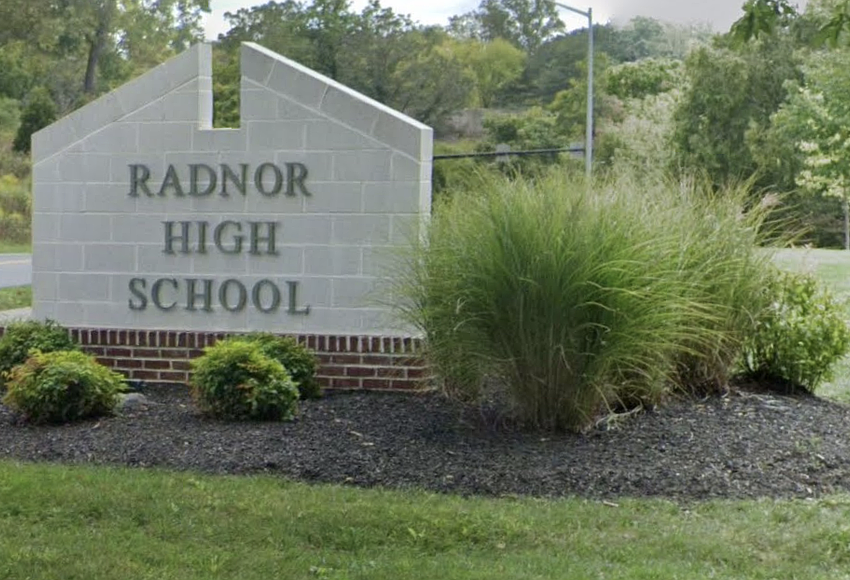
Radnor school board, admin begin adjusting policies after AI video dustup
In the aftermath of the scandal surrounding reports of inappropriate AI-generated video of Radnor High School students, school district officials have been busy updating their policies to address what some parents argued was a disappointing response to the incident.
During a March 10 meeting of the Radnor Township School District School Board’s policy committee, board members detailed proposed changes to how the school district defines and responds to cyberbullying.
“The most important change here, I think, is adding a specific, detailed definition of cyber bullying that includes a very specific call out of generative AI to create sexualized imagery — and basically saying that is de facto sexual harassment and should trigger a Title IX investigation immediately,” Committee Chair Jannie Lau said.
Speaking during the public-comment portion of the meeting, Radnor resident Audrey Greenberg said she appreciates the committee’s efforts to update its policies so far. “I was encouraged to see that the revised harassment language recognizes that the nonessential use of generative AI to create sexualized images of another person constitutes harassment,” she said.
However, “there may be a few areas where additional clarity could help ensure consistent responses” to inappropriate uses of AI, she said.
For example, “it may be helpful to clarify how the district determines jurisdiction and circumstances where digital conduct occurs outside of the school and how it does substantially disrupt the educational environment,” Greenberg said.
The incident that sparked the debate over students’ use of AI occurred during a small gathering of Radnor High School students off school grounds, according to a letter sent by school district officials in January. An investigation determined that students used a personal cell phone to put images of other students into an app that appears to make them move and dance — although the images in question were never discovered. One unnamed juvenile was eventually charged with harassment in connection to the incident, Radnor Township police have said.
Lau said the committee is still weighing whether school board policy or administrative regulations — which often cover more operational details — should address the question of when the school district can and cannot regulate students’ behavior off campus.
Michael Kristofco, the school district solicitor, pointed out that “the last time that the U.S. Supreme Court spoke on this issue was a few years ago.” The nuances of how school districts can regulate off-campus behavior are likely to change in the next couple of years, he said, as lower courts apply that precedent to their cases.
Dr. Scott Hand, the school district’s director of technology innovation and instructional design, said administrators have “already begun” the process of updating their regulations to address students’ use of generative AI. Since that work involves conversations with many stakeholders, it will likely be two months before any updates to administrative regulations (AR) can be shared, he said.
“What’s going to be the toughest part of this is [what] will be in the AR, and that’s really distinguishing or clarifying what our role is with activity that happens outside of the school,” board member Lon Rosenblum said.
But Lau observed that “there are things — very important things — that we can’t really script out, even in administrative regulations.” She added: “There’s just no way we can script out in an AR how to write a good email [or] how to conduct a good investigation.”
Therefore, it will be critical for the school district to be open to learning from experience when it comes to issues like generative AI, recognizing that “maybe this is our first time encountering a situation like this,” Lau said.